
This post contains affiliate links (#ad). As an Amazon Associate, I earn from qualifying purchases.
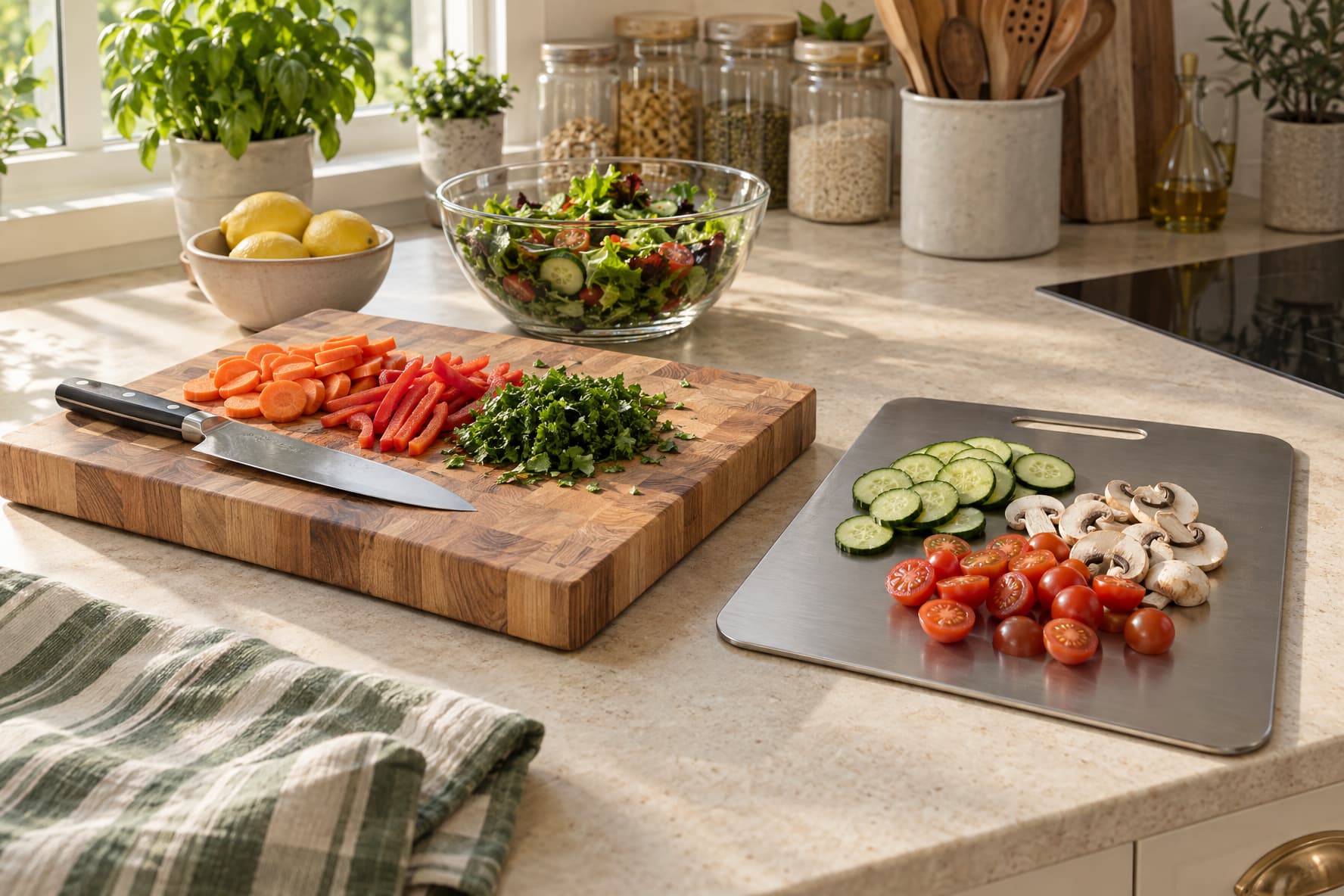
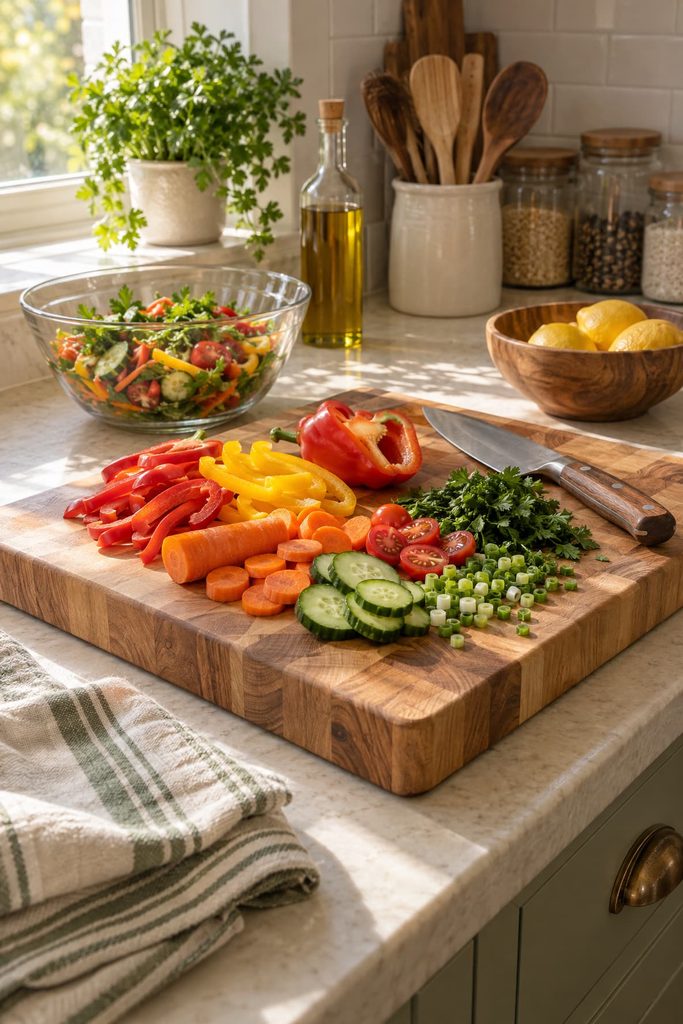
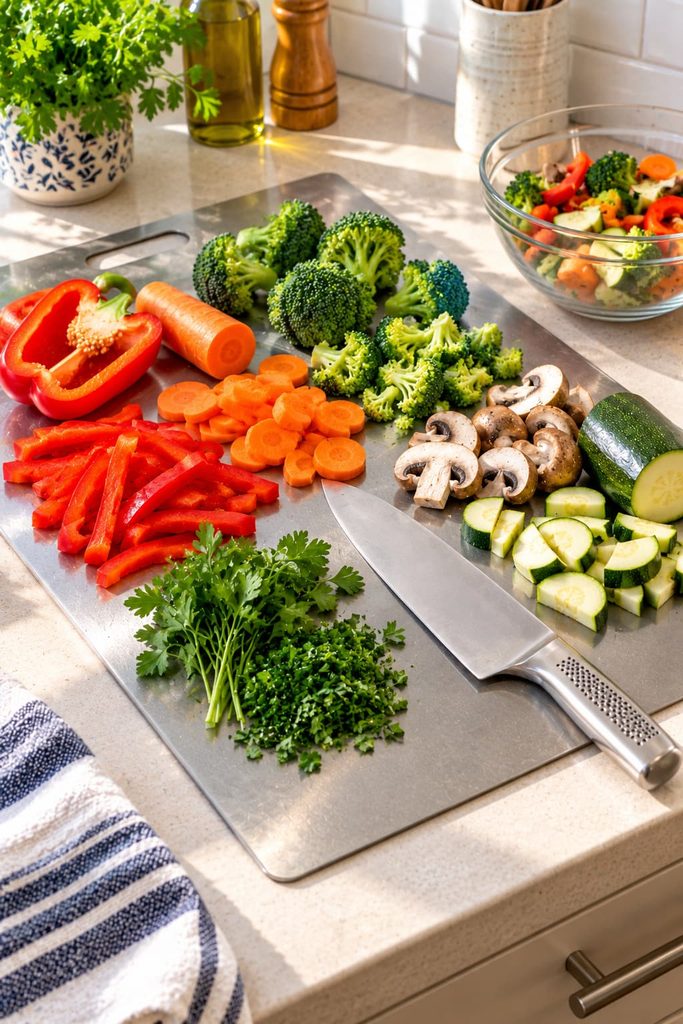
Scene images in this post are illustrations created for this site. See each product listing for the actual item.
Titanium or Wood? Choosing the Right Cutting Board
This guide is for anyone replacing a scratched-up plastic cutting board and stuck between titanium and wood. Both can keep plastic off your cutting surface, but they feel, sound, and age very differently in a real kitchen. Below you’ll find what to check in each material, four cutting boards, two wood and two titanium, plus a wood-care set, and a simple way to choose.
What I Looked For
- Honest material labeling. Some boards sold as titanium are titanium-coated stainless steel, and many have a second side made of wheat straw, which is often blended with plastic. I looked for specs that say exactly what each side is made of.
- Wood type. Closed-grain hardwoods (wood with small, tight pores that hold less moisture) such as maple, walnut, and cherry.
- Grain style. End grain boards show a checkerboard pattern, where you cut into the ends of the wood fibers. Edge grain boards are made from long strips laid side by side.
- A size that fits your space. Titanium boards often run from about 13 x 9 to 18 x 12 inches. Thick wood boards can be large and heavy, so check your counter and sink, too.
- Knife compatibility. Titanium is a much harder surface than wood, which is tougher on knife edges. Check your knife manufacturer’s guidance before choosing a titanium cutting surface.
- Care needs. Wood needs hand washing and regular oiling. Many titanium brands say their boards are dishwasher safe.
- Grip and edges. Nonslip feet, handholds, and juice grooves for messy jobs.
Top picks at a glance (links go to Amazon)
My Top Picks
1. John Boos Chop-N-Slice Maple Board (16 x 10 x 1 inch)
Best for: A first wood board for everyday chopping
Why it works: This is a classic edge grain board, made in the USA from warm, pale maple, with a 1-inch thickness and softened corners. At 4.5 pounds, it’s light enough to lift and rinse in a standard sink. It’s reversible, so one side can be your everyday chopping workhorse while the other stays nice for serving bread or cheese. It’s also NSF certified, a third-party mark for food-equipment safety.
What reviewers like: Many say the size works well even in a small kitchen, and that the board has enough weight to stay put while they chop.
Keep in mind: Some reviewers report splitting or warping over time. Like any wood board, it needs hand washing and regular oiling, and the brand designed it to be used with its own board oil and cream.
Good to know:
- It’s lighter and less expensive than end grain, though knife marks show sooner.
- After washing, dry both sides and stand the board on its edge, so air reaches the whole board.
2. Babilonia American Walnut End Grain Board (16 x 10 x 1.7 inch)
Best for: Daily chopping with knives you care about
Why it works: This is where end grain shines. The board is built from short blocks set on end, which creates that rich checkerboard look, and your knife edge slips between the wood fibers instead of slicing across them. That’s gentler on blades. It’s made from black walnut grown in the USA and arrives pre-seasoned, so it’s ready to use. One clever detail: a notch in the side lets a plate slip right under the board’s edge, so you can slide chopped onions straight off without lifting the board. A deep juice groove catches drips from steak or tomatoes, and the board flips over to serve as a handsome tray.
What reviewers like: Many praise the smooth surface, the look of the wood and the value for the price. One reviewer says the size is just right for two people.
Keep in mind: At about 6.8 pounds it’s heavier than the John Boos board, though built-in handles make it easier to move. Durability gets mixed feedback: most say it’s built to last, but some report cracks within the first month. It’s hand wash only.
Good to know:
- The brand includes a bottle of oil and offers a 2-year warranty.
- Want more room? The same board also comes in 20-inch and XXL sizes.
3. John Boos Mystery Oil and Board Cream Set
Best for: Anyone with a wood board, plus the wooden spoons, bowls and countertops around it
Why it works: One set cares for almost everything wooden in your kitchen. John Boos made it for its own boards, but the brand says it also suits oil-finished kitchen islands and countertops, wooden utensils, bowls and charcuterie trays. Use it in two steps. The Mystery Oil (16 fl oz) is food-grade mineral oil that soaks deep into the wood. The Board Cream (5 oz) follows with an all-natural beeswax finish that helps seal the surface and leaves it smooth. Both carry the NSF mark, the same food-equipment certification as the John Boos board.
What reviewers like: With more than 10,000 ratings and 87% at five stars, this is one of the most trusted wood care sets on Amazon. Reviewers often mention that it makes old pieces look almost new and leaves a long-lasting finish. One reviewer used it on olive wood utensils they’d owned for ten years and was thrilled with how they came back.
Keep in mind: Opinions split on value. Many say it’s well worth the price, while others feel plain food-grade mineral oil does a similar job for less.
Good to know:
- Skip the add-on applicator. A clean, soft cloth works fine.
- The cream’s label says it’s made for all types of wood surfaces, so it suits your walnut board, too.
4. Adivo Pure Titanium Cutting Board (15 x 10 inch)
Best for: Meat, fruit, vegetables and even bread dough, all on one dishwasher-safe board with no plastic or wood
Why it works: This board is made of titanium, which the brand says is 100% pure, so there’s no coating to wear off and no plastic or wood anywhere. The two sides are designed for different jobs. The front has a fine textured surface that grips fruit and vegetables as you cut, and the smooth reverse side is for meat, so raw meat never touches your produce side. The surface doesn’t absorb juices, cleanup is a quick rinse or a run through the dishwasher, and the board is a handy flat surface for kneading dough, too. A juice groove keeps drips off your counter, and silicone corner guards help it stay put. At about 1.8 pounds and only 1.5 mm thin, it’s light to lift and easy to slip into a drawer.
What reviewers like: Reviewers often mention its quality and how steady it stays while they cut. One ran his own purity tests and confirmed it’s titanium, and another says it hasn’t dulled his knives any faster than his wood board did.
Keep in mind: Expect fine scratches. Titanium is softer than stainless steel, so knife marks are normal, but it’s still harder than wood and tougher on knife edges. One reviewer noted the board flexes slightly because of its thinness, and another advises care with the edges when hand washing.
Good to know:
- The listing comes in several sizes, so you can pick the one that fits your sink.
- Fair warning: the first few cuts on metal are louder than you’d expect.
5. HIBINO Japanese Titanium Cutting Board (Medium, 14 x 10 inch)
Best for: Cooks who want genuine Japanese-made titanium and don’t mind paying a little more for it
Why it works: This is the premium titanium pick, and the price reflects how it’s made. The box says it’s made in Tsubame, Japan, a city long known for metalworking, from 99.5% pure titanium, and the brand describes each board as handcrafted. Plenty of “titanium” boards on Amazon turn out to be stainless steel or blends, so a clearly labeled, Japan-made board is part of what you’re paying for. Like any solid titanium board, it has no plastic to wear down into your food and no coating to chip. It’s thin, light and easy to lift with the four-finger grip handle, and the brand says it’s dishwasher safe and resists odors. A nonslip silicone mat comes in the box to keep it steady on the counter.
What reviewers like: Reviewers often mention the quality, the light weight and how easy it is to clean. One reviewer, an engineer, valued that it’s one of the few boards he trusts to be real titanium. Another says it’s a relief to stop worrying about plastic shavings from old boards, and several call it a thoughtful gift.
Keep in mind: It’s pricier than most titanium boards, and reviewers split on value. At about 1 mm thick it’s noticeably thin, and you’ll see light knife marks with use. The brand notes that small polishing marks are part of the handcrafted finish and don’t affect hygiene or performance. One reviewer found the board slipped until they flipped the mat over.
Good to know:
- To keep the finish looking its best, skip harsh scrubbers and wipe the board dry after washing.
- It comes in Small and Large, too, if you want a set for different jobs.
Quick Picks You Can Shop
If you’re only buying one board, start with wood. Each pick below links to Amazon.
The John Boos maple board handles everyday chopping, and at 4.5 pounds it’s easy to lift and rinse.
The John Boos oil and cream set keeps any wood board, and your wooden spoons, in good shape.
The Adivo titanium board is the one to add for a dishwasher-safe board, with a smooth side for meat and a textured side for produce.
Quick Buying Tips
- Read the full specs, not just the title. “Pure titanium” in a listing name doesn’t always match the details below it.
- Check the weight of any “titanium” board. Real titanium is roughly 40% lighter than stainless steel of the same size, so a surprisingly heavy board may not be what the title says.
- Check the photos of the back side of any titanium board. If one side looks tan or speckled, it’s likely wheat straw, so read what it’s made of.
- Measure your sink before buying a big board. An 18 x 12 inch board is awkward to rinse in a small sink.
- Choose maple, walnut, or cherry for wood. Open-grain woods like red oak hold more moisture.
- Check the finish. Look for food-grade mineral oil or a mineral oil and beeswax blend.
- If dishwasher cleaning matters to you, titanium is the one to consider. Wood boards should be hand washed and never soaked.
- A thick end grain board can be heavy to lift and dry, so look at the listed weight.
- Look for nonslip feet, or set the board on a flat, damp towel while you work.
- If you cook raw meat often, use a separate board for meat and another for produce and bread.
Quick tip: Before you order, mark the board’s size on your counter with sheets of paper. Leave room for your knife handle and a bowl beside it.
Smart Swaps
- Edge grain instead of end grain. A lower price and lighter to handle, though knife marks show sooner.
- Maple instead of walnut. Maple usually costs less and does the same everyday job.
- One good board instead of a matching set. Add a second board later only if a specific task calls for it.
- An everyday titanium board instead of a Japanese-made one. You still get solid titanium with no plastic, for less money.
- Plain food-grade mineral oil from the pharmacy aisle instead of branded board oil. Check that the label says food grade or USP (meaning it meets US Pharmacopeia purity standards).
- Refresh the wood board you already have. Scrub it, let it dry fully, and oil it before deciding it needs replacing.
The Easy Way to Decide
For most everyday chopping, wood is the simpler place to start.
If you want a first board without a big spend, pick the John Boos maple board.
If you want to be gentle on your knives, pick the Babilonia walnut end grain board.
If you want a dishwasher-safe board with no plastic or wood, pick the Adivo titanium board.
If you’d like titanium made in Japan and don’t mind paying more, pick the HIBINO.