
This post contains affiliate links (#ad). As an Amazon Associate, I earn from qualifying purchases.
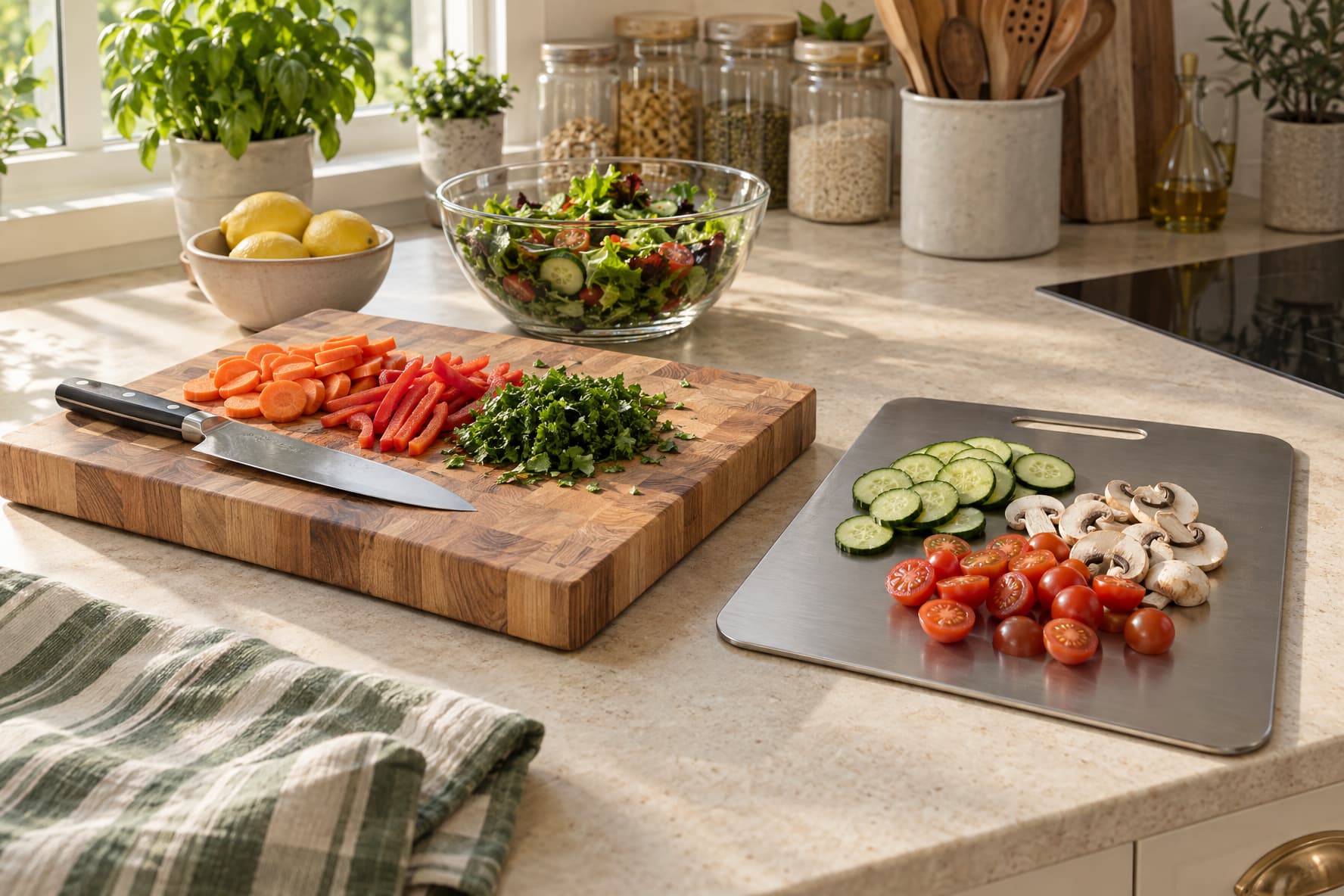
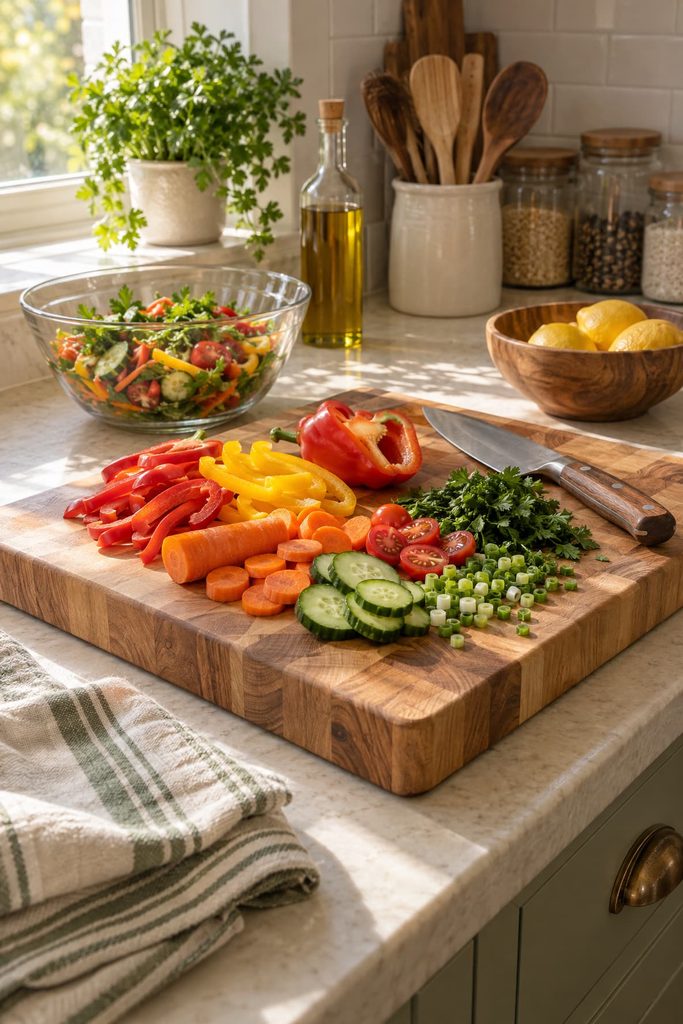
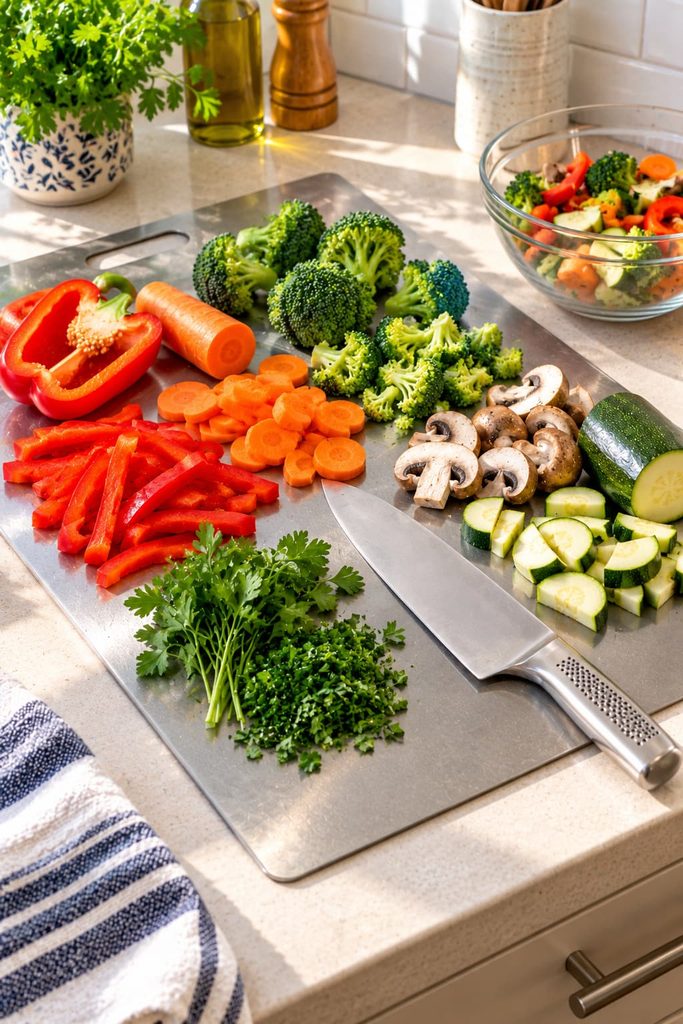
Scene images in this post are illustrations created for this site. See each product listing for the actual item.
Titanium or Wood? Choosing the Right Cutting Board
This guide is for anyone replacing a scratched-up plastic cutting board and stuck between titanium and wood. Both keep plastic off your cutting surface, but that’s about where the similarities end. Wood feels familiar and forgiving under a knife. Titanium is thin, easy to wash, and has a crisp, metallic sound under the knife.
Below you’ll find what to check in each material, four boards (two wood, two titanium), a wood-care set, and a simple way to choose. Details and prices can change, so check each listing before you buy.
What I Looked For
A good cutting board doesn’t need to be fancy. It needs to fit your kitchen, suit your knives, and be something you’ll enjoy using.
- Honest material labeling. Some boards sold as titanium are titanium-coated stainless steel, and many have a second side made of wheat straw, which is often blended with plastic. I looked for specs that say exactly what each side is made of.
- Wood type. Closed-grain hardwoods (wood with small, tight pores that hold less moisture) such as maple, walnut, and cherry.
- Grain style. End grain boards show a checkerboard pattern, where you cut into the ends of the wood fibers. Edge grain boards are made from long strips laid side by side.
- A size that fits your space. Titanium boards often run from about 13 x 9 to 18 x 12 inches. Thick wood boards can be large and heavy, so check your counter and sink, too.
- Knife compatibility. Titanium is a much harder surface than wood, which is tougher on knife edges. Check your knife manufacturer’s guidance before choosing a titanium cutting surface.
- Care needs. Wood needs hand washing and regular oiling. Many titanium brands say their boards are dishwasher safe.
- Grip and edges. Nonslip feet, handholds, and juice grooves for messy jobs.
Top picks at a glance (links go to Amazon)
My Top Picks
1. John Boos Chop-N-Slice Maple Board (16 x 10 x 1 inch)

Best for: A first wood board for everyday chopping
Why it works: This is a classic edge grain board, made in the USA from warm, pale maple, with a 1-inch thickness and softened corners. At 4.5 pounds, it’s light enough to lift and rinse in a standard sink. It’s reversible, so one side can be your everyday chopping workhorse while the other stays nice for serving bread or cheese. It’s also NSF certified, a third-party mark for food-equipment safety.
Keep in mind: Like any wood board, it can split or warp if it’s soaked or left wet. It needs hand washing and regular oiling, and the brand designed it to be used with its own board oil and cream.
Good to know:
- It’s lighter and less expensive than end grain, though knife marks show sooner.
- After washing, dry both sides and stand the board on its edge, so air reaches the whole board.
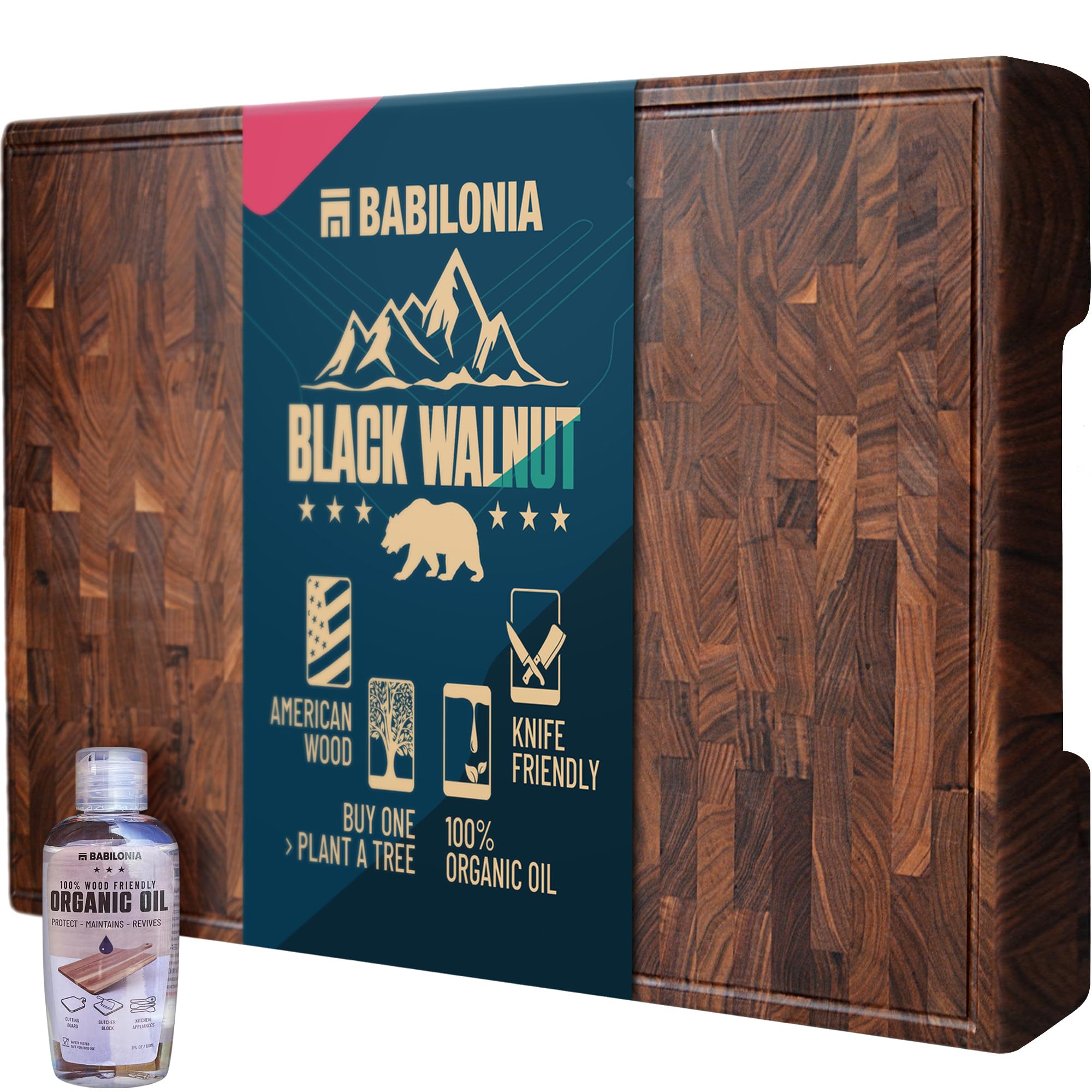
2. Babilonia American Walnut End Grain Board (16 x 10 x 1.7 inch)
Best for: Daily chopping with knives you care about
Why it works: This is where end grain shines. The board is built from short blocks set on end, which creates that rich checkerboard look, and your knife edge slips between the wood fibers instead of slicing across them. That’s gentler on blades. It’s made from black walnut grown in the USA and arrives pre-seasoned, so it’s ready to use. One clever detail: a notch in the side lets a plate slip right under the board’s edge, so you can slide chopped onions straight off without lifting the board. A deep juice groove catches drips from steak or tomatoes, and the board flips over to serve as a handsome tray.
Keep in mind: At about 6.8 pounds it’s heavier than the John Boos board, though built-in handles make it easier to move. It’s hand wash only, and like any wood board it needs regular oiling to keep it from drying out and cracking.
Good to know:
- The brand includes a bottle of oil and offers a 2-year warranty.
- Want more room? The same board also comes in 20-inch and XXL sizes.
3. John Boos Mystery Oil and Board Cream Set

Best for: Anyone with a wood board, plus the wooden spoons, bowls and countertops around it
Why it works: A wood board is a little like a houseplant. It doesn’t need constant attention, but it does like being looked after. This one set cares for almost everything wooden in your kitchen. John Boos made it for its own boards, but the brand says it also suits oil-finished kitchen islands and countertops, wooden utensils, bowls and charcuterie trays. Use it in two steps. The Mystery Oil (16 fl oz) is food-grade mineral oil that soaks deep into the wood. The Board Cream (5 oz) follows with an all-natural beeswax finish that helps seal the surface and leaves it smooth. Both carry the NSF mark, the same food-equipment certification as the John Boos board.
Keep in mind: Since the Mystery Oil is food-grade mineral oil, a plain bottle from the pharmacy does the oiling step for less. The cream is what adds the beeswax finish.
Good to know:
- Skip the add-on applicator. A clean, soft cloth works fine.
- The cream’s label says it’s made for all types of wood surfaces, so it suits your walnut board, too.
4. Adivo Pure Titanium Cutting Board (15 x 10 inch)
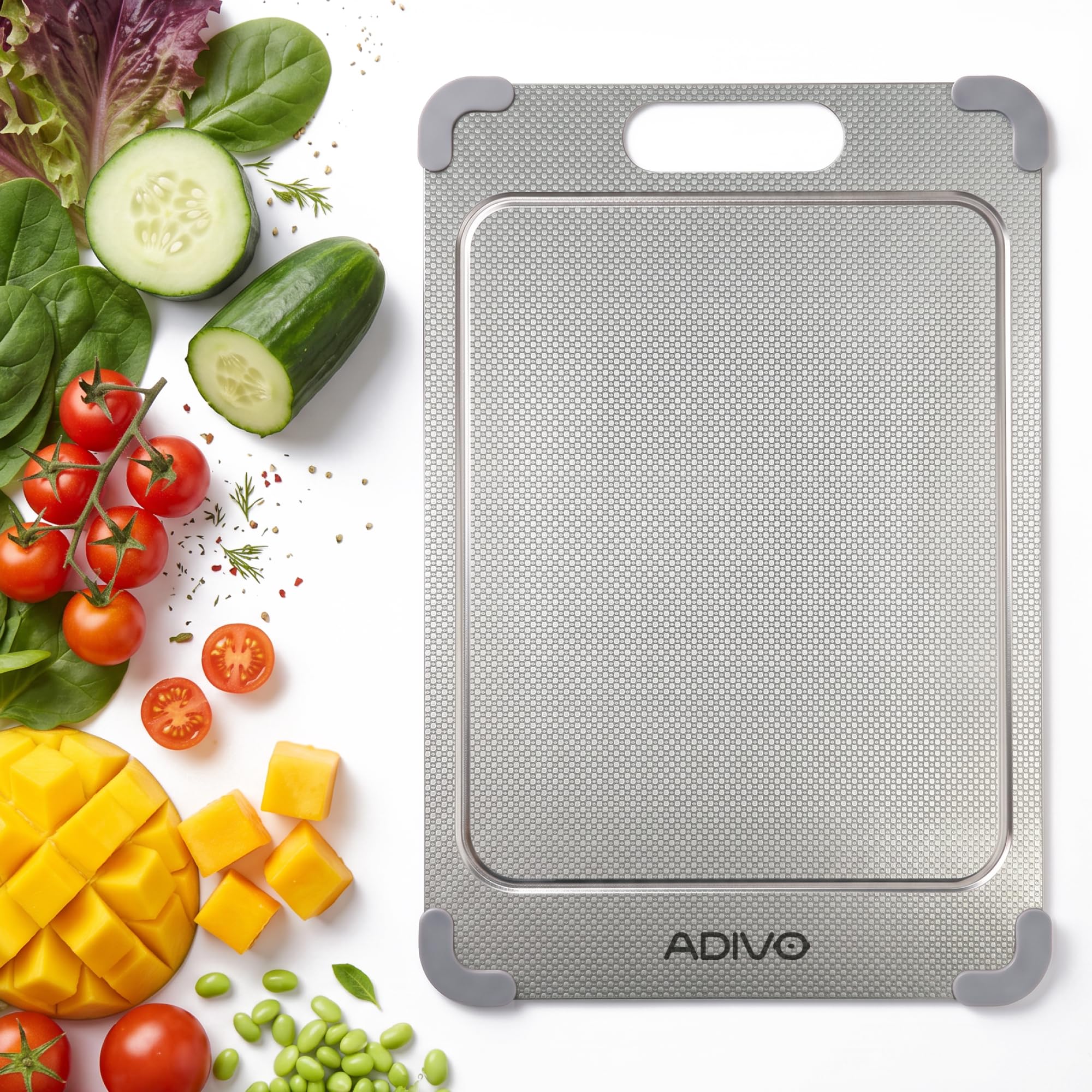
Best for: Meat, fruit, vegetables and even bread dough, all on one dishwasher-safe board with no plastic or wood
Why it works: This board is made of titanium, which the brand says is 100% pure, so there’s no coating to wear off and no plastic or wood anywhere. The two sides are designed for different jobs. The front has a fine textured surface that grips fruit and vegetables as you cut, and the smooth reverse side is for meat, so raw meat never touches your produce side. The surface doesn’t absorb juices, cleanup is a quick rinse or a run through the dishwasher, and the board is a handy flat surface for kneading dough, too. A juice groove keeps drips off your counter, and silicone corner guards help it stay put. At about 1.8 pounds and only 1.5 mm thin, it’s light to lift and easy to slip into a drawer.
Keep in mind: Expect fine scratches. Titanium is softer than stainless steel, so knife marks are normal, but it’s still harder than wood and tougher on knife edges. At only 1.5 mm thin, expect a little flex, and take care with the thin edges when hand washing.
Good to know:
- The listing comes in several sizes, so you can pick the one that fits your sink.
- From my own titanium board: chopping has a metallic sound instead of wood’s softer thud. Not louder, just different.
5. HIBINO Japanese Titanium Cutting Board (Medium, 14 x 10 inch)
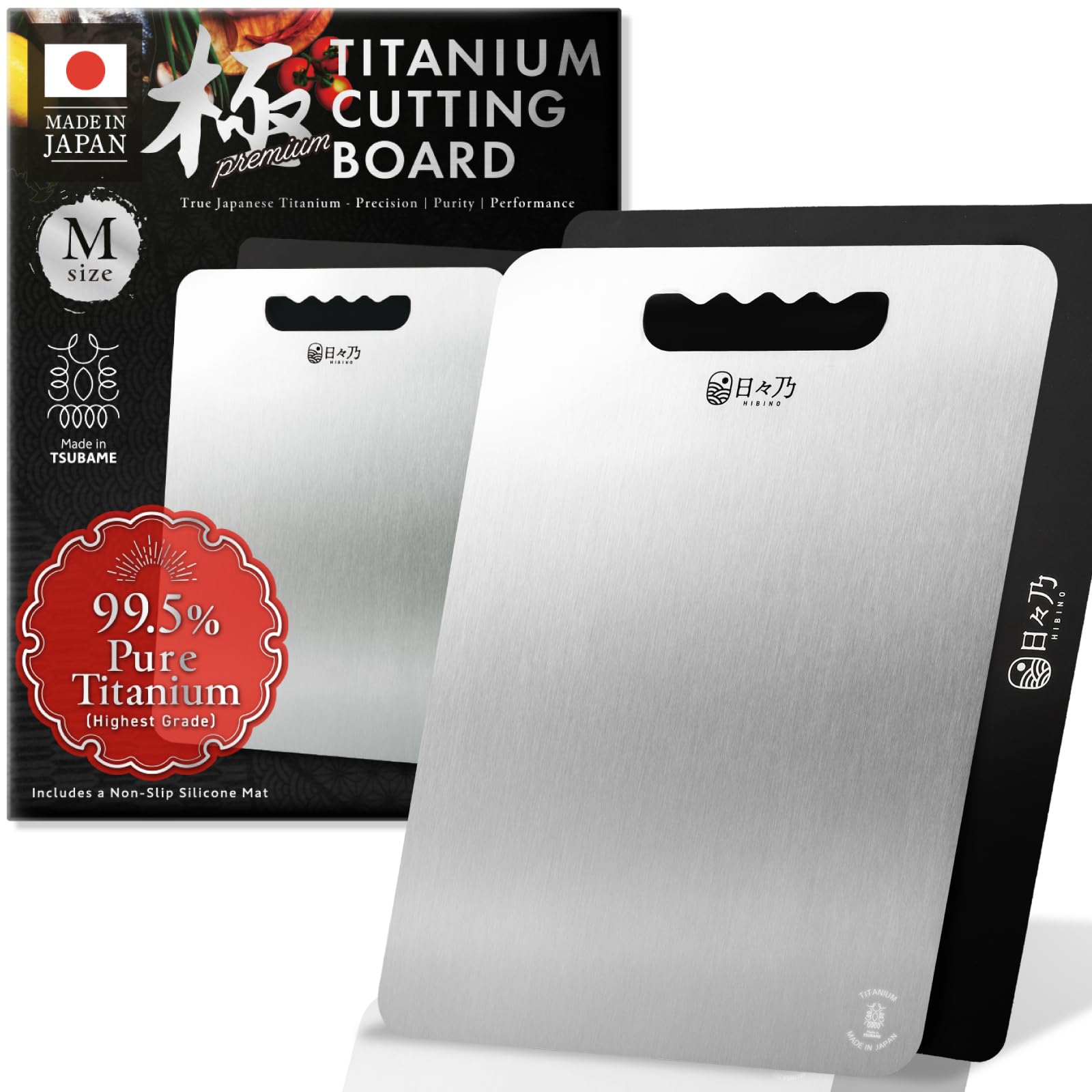
Best for: Cooks who want genuine Japanese-made titanium and don’t mind paying a little more for it
Why it works: This is the premium titanium pick, and the price reflects how it’s made. The box says it’s made in Tsubame, Japan, a city long known for metalworking, from 99.5% pure titanium, and the brand describes each board as handcrafted. Plenty of “titanium” boards on Amazon turn out to be stainless steel or blends, so a clearly labeled, Japan-made board is part of what you’re paying for. Like any solid titanium board, it has no plastic to wear down into your food and no coating to chip. It’s thin, light and easy to lift with the four-finger grip handle, and the brand says it’s dishwasher safe and resists odors. A nonslip silicone mat comes in the box to keep it steady on the counter.
Keep in mind: It’s pricier than most titanium boards. At about 1 mm thick it’s noticeably thin, and you’ll see light knife marks with use. The brand notes that small polishing marks are part of the handcrafted finish and don’t affect hygiene or performance. Use the included mat to keep the board steady on the counter.
Good to know:
- To keep the finish looking its best, skip harsh scrubbers and wipe the board dry after washing.
- It comes in Small and Large, too, if you want a set for different jobs.
Quick Picks You Can Shop
If you’re only buying one board, start with wood. Each pick below links to Amazon.
The John Boos maple board handles everyday chopping, and at 4.5 pounds it’s easy to lift and rinse.
The John Boos oil and cream set keeps any wood board, and your wooden spoons, in good shape.
The Adivo titanium board is the one to add for a dishwasher-safe board, with a smooth side for meat and a textured side for produce.
Quick Buying Tips
Before a handsome product photo talks you into anything, give the details a quick reality check.
- Read the full specs, not just the title. “Pure titanium” in a listing name doesn’t always match the details below it.
- Check the weight of any “titanium” board. Real titanium is roughly 40% lighter than stainless steel of the same size, so a surprisingly heavy board deserves a closer look. Weight alone can’t prove what a board is made of, so read the specs too.
- Check the photos of the back side of any titanium board. If one side looks tan or speckled, it’s likely wheat straw, so read what it’s made of.
- Measure your sink before buying a big board. An 18 x 12 inch board is awkward to rinse in a small sink.
- Choose maple, walnut, or cherry for wood. Open-grain woods like red oak hold more moisture.
- Check the finish. Look for food-grade mineral oil or a mineral oil and beeswax blend.
- If dishwasher cleaning matters to you, titanium is the one to consider. Wood boards should be hand washed and never soaked.
- A thick end grain board can be heavy to lift and dry, so look at the listed weight.
- Look for nonslip feet, or set the board on a flat, damp towel while you work.
- Use separate boards for raw meat and ready-to-eat foods, or wash and sanitize the board well between tasks.
Quick tip: Before you order, mark the board’s size on your counter with sheets of paper. Leave room for your knife handle and a bowl beside it.
Smart Swaps
Sometimes the smartest upgrade is knowing where not to spend extra.
- Edge grain instead of end grain. A lower price and lighter to handle, though knife marks show sooner.
- Maple instead of walnut. Maple usually costs less and does the same everyday job.
- One good board instead of a matching set. Add a second board later only if a specific task calls for it.
- An everyday titanium board instead of a Japanese-made one. You still get solid titanium with no plastic, for less money.
- Plain food-grade mineral oil from the pharmacy aisle instead of branded board oil. Check that the label says food grade or USP (meaning it meets US Pharmacopeia purity standards).
- Refresh the wood board you already have. Scrub it, let it dry fully, and oil it before deciding it needs replacing.
The Easy Way to Decide
For most everyday chopping, wood is the simpler place to start.
If you want a first board without a big spend, pick the John Boos maple board.
If you want to be gentle on your knives, pick the Babilonia walnut end grain board.
If you want a dishwasher-safe board with no plastic or wood, pick the Adivo titanium board.
If you’d like titanium made in Japan and don’t mind paying more, pick the HIBINO.
Whichever you choose, pick the board you’ll be happy to reach for on an ordinary Tuesday. That’s the one that earns its place in your kitchen.